
Beginner
Kahawai Fishing Guide
Kahawai are one of New Zealand’s favourite sportfish, known for their aggressive strikes and powerful fights. Learn where to find them, the best time to fish, and which lures and techniques work best from the beach, rocks or boat.
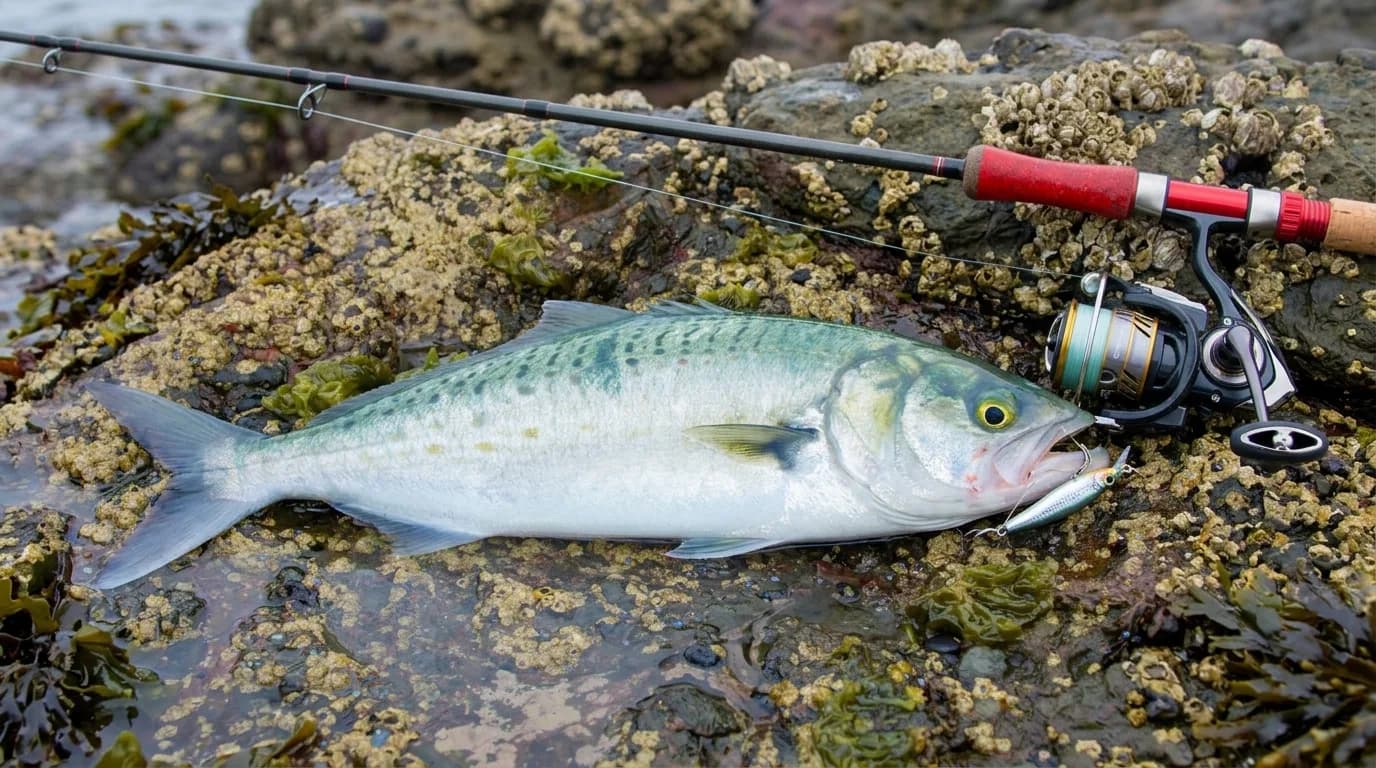
Kahawai is one of New Zealand’s most popular sportfish, often nicknamed the “people’s fish”. Found throughout much of the country’s coastal waters, kahawai are known for their aggressive feeding, powerful runs and spectacular fights. They’re a great target for beginners and experienced anglers alike, whether you’re fishing from the beach, rocks, a wharf or a boat.
Kahawai at a Glance
- Māori name: Kahawai
- Scientific name: Arripis trutta; Arripis xylabion (Kermadec kahawai)
- New Zealand all-tackle record: 9.75 kg
- Eating quality: Good
- Typical size: 40–50 cm and around 1–2 kg
Kahawai have streamlined bodies, silver-white bellies and blue-grey to blue-green backs covered with small dark speckles. Juvenile fish under 25 cm often have yellow spots along their sides and darker stripes across their backs.
Most kahawai caught around New Zealand are around 1–2 kg, but the Kermadec kahawai can grow much larger, reaching over 9 kg. These larger fish are found in small numbers around the Far North and Kermadec Islands.
Kahawai are fast-growing predators that feed mainly on small fish and krill. Their strength and willingness to attack lures make them an exciting catch on light tackle.
They’re also good eating when handled properly. Bleed the fish soon after catching it and keep it chilled. Kahawai has an oily flesh that works particularly well for smoking, and very fresh, properly handled fish can also be enjoyed as sashimi.
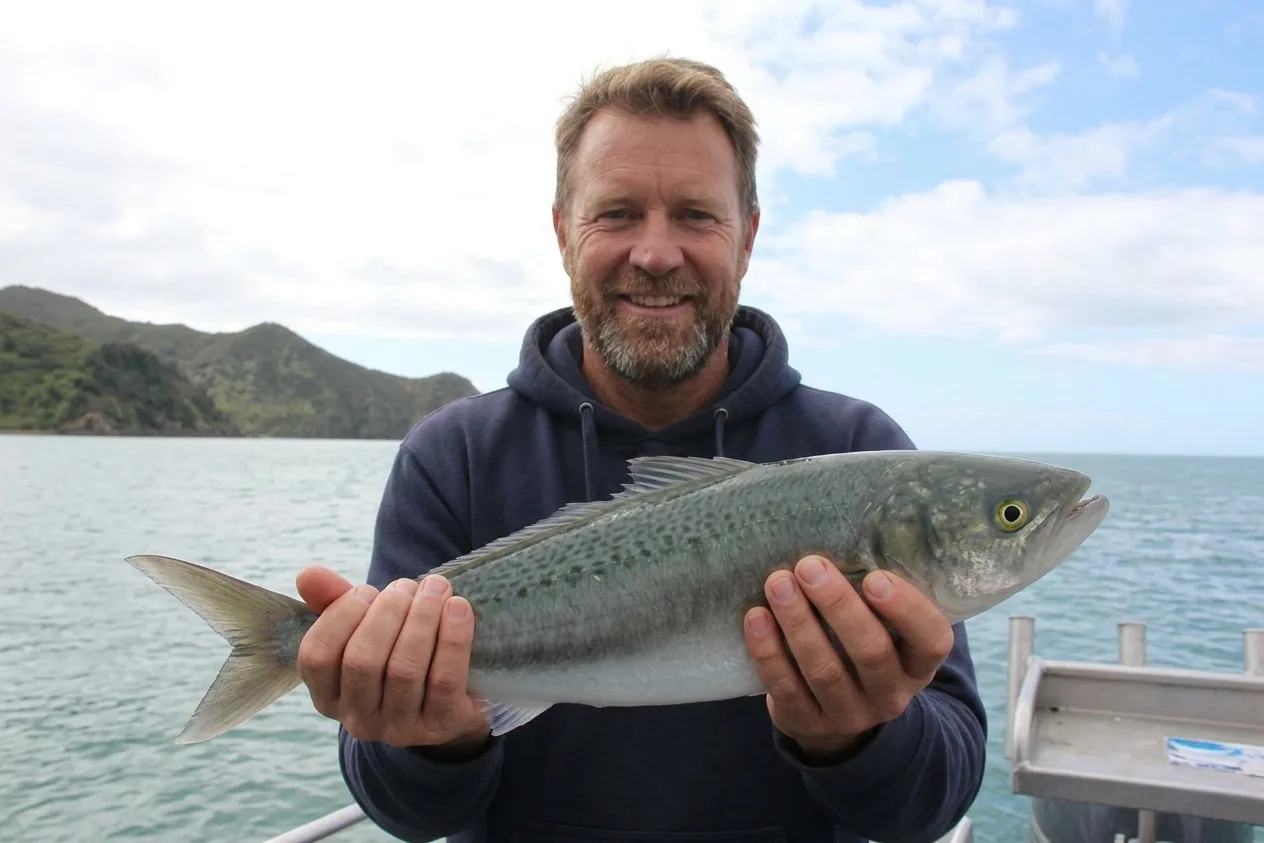
Where to Catch Kahawai in New Zealand
Kahawai can be found around much of New Zealand, including coastal waters, harbours, estuaries and river mouths. They’re generally more common in the North Island, although they’re also widely caught in the South Island.
Popular places to target kahawai include:
- Beaches: Cast into deeper gutters and areas where baitfish gather.
- Rocky headlands: Look for schools feeding around exposed points and rocky coastlines.
- Wharves and harbours: Kahawai often move through these areas in search of small fish.
- River mouths and estuaries: These can be especially productive when whitebait and other small baitfish are running.
- Boats: Look for surface-feeding schools around islands, headlands and offshore baitfish concentrations.
One of the easiest ways to find kahawai is to watch for diving seabirds. When birds are repeatedly diving into the water, they’re often feeding on baitfish being pushed to the surface by predatory fish. Kahawai may be feeding underneath or alongside the same schools.
Keep an eye out for splashing water and fish breaking the surface, too. When kahawai are actively feeding, a school can move through an area
quickly, so being ready to cast can make all the difference.
Best Time to Catch Kahawai
Kahawai can be caught throughout the year in many parts of New Zealand, but their numbers and condition often improve during spring and autumn.
Spring: Kahawai move inshore to feed on baitfish, including whitebait and pilchards. River mouths and coastal areas can be particularly productive.
Autumn: Schools may gather to feed on anchovies and other small baitfish, creating excellent opportunities for lure fishing.
Kahawai can feed at any time of day, but early morning and evening are often productive periods. These times can bring increased surface activity, making feeding schools easier to spot.
Local conditions, tides and the availability of baitfish all influence how successful a session will be.
How to Catch Kahawai
Kahawai are aggressive feeders and can be caught using a wide range of techniques. Lures, bait and fly fishing can all be effective, so you don’t need complicated equipment to get started.
1. Lure Fishing
Lure fishing is one of the most exciting ways to catch kahawai. Spinners, metal jigs, soft baits and trolled lures can all work well, especially when fish are feeding in schools.
The key is to match your lure to the baitfish the kahawai are eating.
- Silver metal jigs: A great starting point when kahawai are chasing small, silver baitfish.
- Spinners: Easy to use and effective when retrieved through active feeding areas.
- Soft baits: Useful when fish are feeding below the surface or responding to a more subtle presentation.
- Small lures and micro-jigs: Worth trying when kahawai are feeding on tiny baitfish or krill.
Start by casting into or beyond a visible school and retrieving your lure at a steady pace. If the fish aren’t responding, vary your retrieve speed or add short twitches to imitate an injured baitfish.
If surface retrieves aren’t working, let the lure sink deeper before winding it back. Kahawai may be feeding below the surface even when birds or other fish activity suggest bait is nearby.
2. Bait Fishing
Bait fishing is a reliable option from beaches, wharves, rocks and boats. Kahawai aren’t particularly fussy when they’re feeding actively, so simple rigs and fresh bait can be enough.
Pilchard is a popular choice. Small cubes of pilchard presented on a strayline rig can be especially effective when fish are feeding near the surface.
Burley can also help attract kahawai and keep them around your fishing spot. If you can see fish moving through the burley trail, try a small bait with little or no added weight so it drifts naturally with the current.
When fishing from the beach, look for deeper gutters and channels where kahawai may be searching for food. Casting into these areas can improve your chances, particularly when baitfish are moving through the surf zone.
3. Fly Fishing
Kahawai are a favourite target for saltwater fly anglers. They’re strong fighters, readily chase baitfish imitations and often leap clear of the water after being hooked.
A 6- or 7-weight fly setup can provide an enjoyable challenge when targeting average-sized fish, although your choice of gear should suit the size of the fish and the conditions.
Streamer flies that imitate small baitfish are a good starting point. Cast near feeding activity and strip the fly back quickly, usually just below the surface.
When kahawai are feeding aggressively, repeated casts into a school can produce fast action. Just be prepared for powerful runs and sudden changes of direction.
What Fishing Gear Do You Need?
One of the best things about kahawai fishing is that you don’t need highly specialised equipment. The right setup depends on where you’re fishing and the technique you prefer.
For lure fishing: A spinning rod and reel with suitable line for casting metal jigs, spinners or soft baits is a versatile choice. Silver lures are a useful option to carry when kahawai are chasing baitfish.
For bait fishing: A general-purpose beach, rock or boat setup will work well. Choose a rig that suits the depth, current and conditions, and use bait such as pilchard.
For surfcasting: Look for deeper gutters and areas where waves and currents concentrate food. A suitable surfcasting rod and rig will help you reach these zones from the beach.
For fly fishing: A saltwater fly rod, floating line and baitfish-pattern streamer can be a great combination when kahawai are feeding near the surface.
There’s no single setup that works best everywhere. Match your gear to the location, conditions and size of fish you expect to encounter.
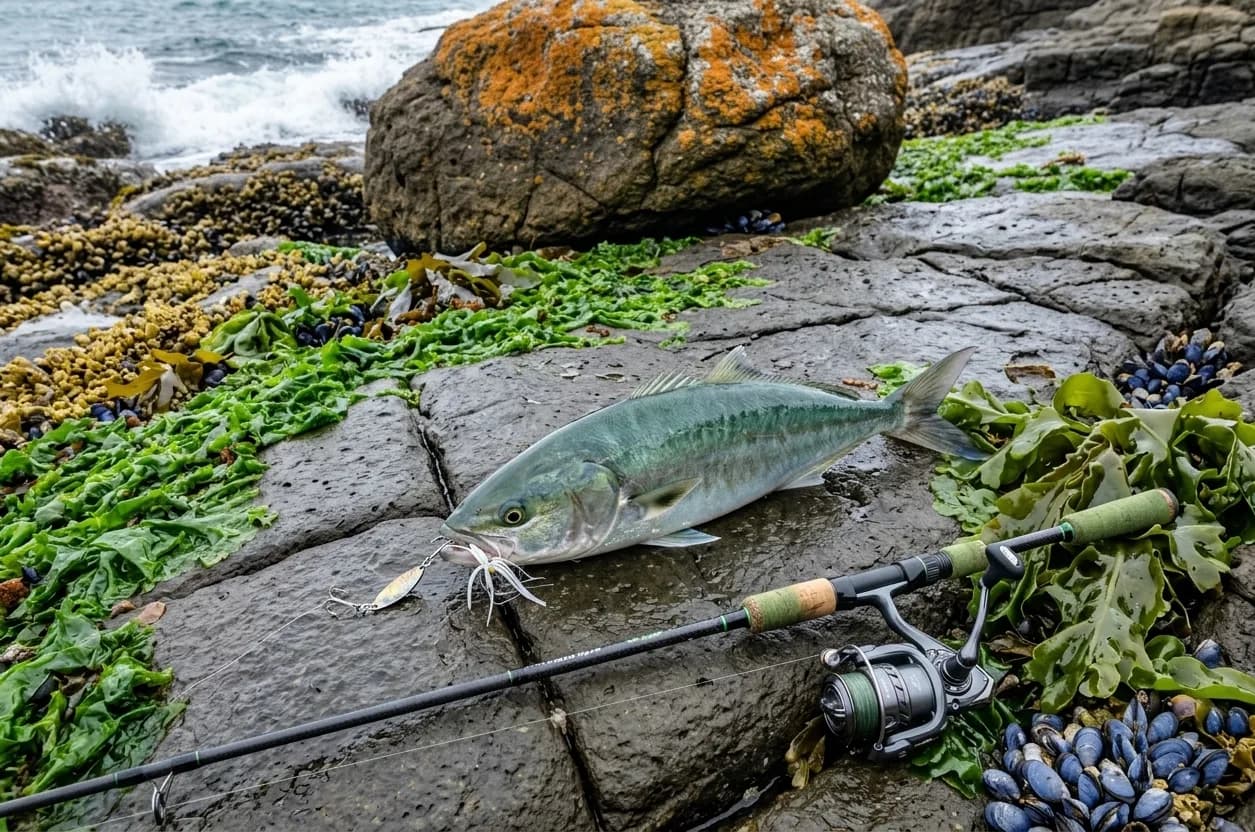
Final Tips for Catching Kahawai
- Watch for diving birds, surface splashes and schools of baitfish.
- Carry a few silver lures in different sizes so you can match the bait.
- If fish ignore your lure near the surface, try a deeper retrieve or change your speed.
- Use fresh bait and a natural presentation when bait fishing.
- Be ready to move when a school appears, as feeding kahawai can travel quickly.
- Bleed your catch promptly, keep it chilled and handle it carefully if you plan to eat it.
Whether you’re casting metal lures from the rocks, fishing a beach gutter or chasing surface schools from a boat, kahawai offer some of New Zealand’s most accessible and enjoyable fishing. They’re a great fish to learn on, but their speed and fighting power mean even experienced anglers can have a memorable session.