
Beginner
Kingfish Fishing in New Zealand: Where, When and How to Catch Them
Kingfish are one of New Zealand's toughest inshore sportfish, known for their powerful runs and hard-fighting nature. Learn where to find them, when to target them, and how to catch them using livebait, jigs and topwater lures.
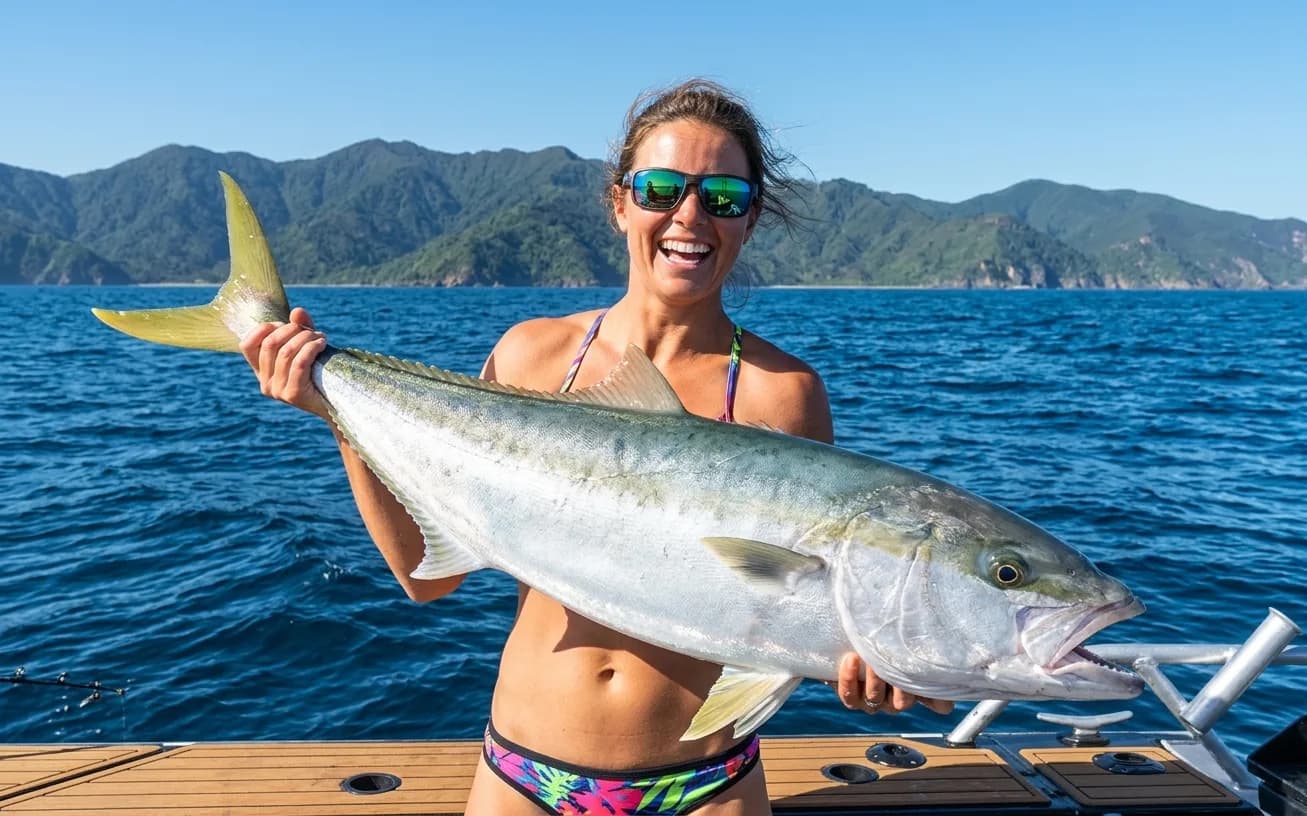
If there's one fish that gets Kiwi anglers excited, it's the kingfish. These powerful predators grow big, hit hard and will put your fishing gear to the test from the moment they take the bait.
Known as Haku in Māori, the yellowtail kingfish (Seriola lalandi) is one of New Zealand's most popular inshore gamefish. They're also excellent eating when handled and prepared properly.
Kingfish can turn up around shallow reefs, offshore pinnacles, harbour entrances and even marker buoys. But finding them is only half the battle. You'll also need the right technique, a bit of patience and enough stopping power to keep one out of the nearest reef!
In this guide, we'll cover where to find kingfish around New Zealand, the best time to target them, and three proven techniques to help you land one.
Kingfish at a Glance
- Common name: Yellowtail Kingfish
- Māori name: Haku
- Scientific name: Seriola lalandi
- New Zealand all-tackle record: 52 kg
- Eating quality: Excellent
- Typical habitat: Reefs, pinnacles, headlands, harbours and offshore waters
- Diet: Baitfish, squid and other smaller fish
What Do Kingfish Look Like?
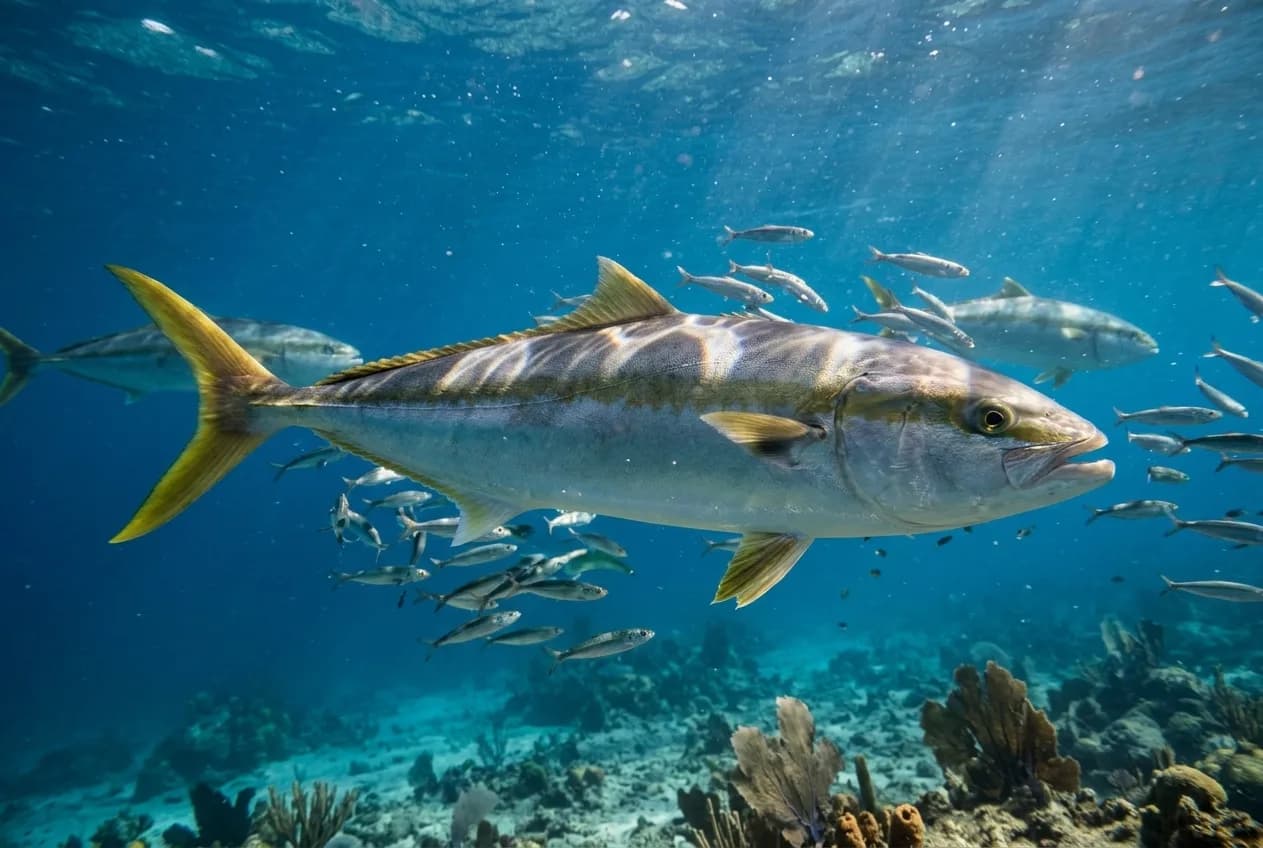
Kingfish have muscular, streamlined bodies built for speed. Their backs are generally olive-green, with yellow fins and a distinctive golden-yellow stripe running along their sides.
Their large, forked tails help them accelerate quickly, making them powerful opponents once hooked.
Kingfish are predators that feed on a variety of prey, including squid, schooling baitfish and smaller reef fish. They often hunt in groups, sometimes forming schools of dozens of fish. Larger individuals, however, may be found swimming alone.
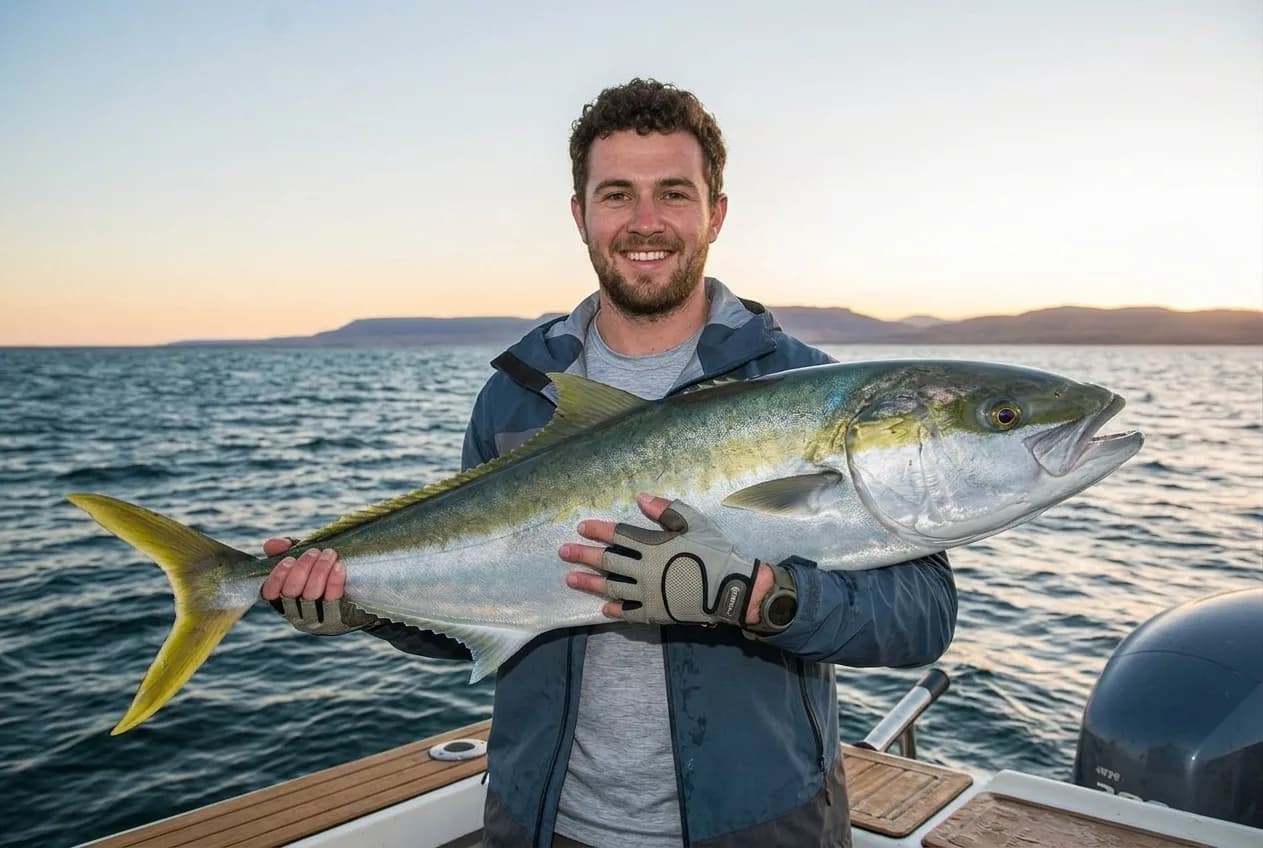
Recreational catches commonly include fish around 80–90 cm long, although kingfish can grow well beyond a metre.
One thing is certain: if you're targeting kingfish, don't underestimate their strength. A hooked fish will often make a powerful first run towards nearby structure, so being prepared before the bite is essential.
Where to Catch Kingfish in New Zealand
Kingfish are found throughout New Zealand, from the Kermadec Islands in the north to Foveaux Strait in the south. However, they're generally more common around the northern half of the North Island.
The key to finding kingfish is understanding three things: structure, current and baitfish.
1. Reefs and Underwater Pinnacles
Reefs, underwater pinnacles and rocky headlands are classic kingfish territory.
These structures attract smaller fish and other marine life, giving kingfish plenty of opportunities to feed. Strong currents flowing around underwater features can also create eddies and areas where baitfish gather.
When fishing these locations, pay attention to the up-current side of the structure and any areas where baitfish appear to be holding.
Be ready when a kingfish takes your bait or lure. Nearby rocks can quickly turn a promising hookup into a lost fish.
2. Harbours and Shallow Bays
You don't always need to head offshore to find kingfish.
They regularly enter shallow bays and harbours in search of food. Harbour entrances, channels and areas with moving water can be particularly productive, especially when baitfish are present.
Kingfish may also patrol around marker buoys, wharves and other structures where smaller fish gather.
Keep an eye out for surface activity, nervous baitfish and birds working over the water. These signs can help you identify areas worth investigating.
3. Offshore Fishing Grounds
New Zealand has several well-known offshore destinations for anglers chasing large kingfish.
Areas such as the Three Kings Islands, D'Urville Island, White Island and the Ranfurly Banks have earned reputations for producing impressive fish.
These locations often feature deep water, strong currents and significant underwater structure. They can offer excellent opportunities, but conditions can change quickly, so suitable boat preparation and safety equipment are essential.
Best Time to Catch Kingfish
Kingfish can be caught throughout the year, but fishing often improves during the warmer months.
In popular inshore areas such as the Hauraki Gulf, December to May can be a productive period for targeting kingfish. Warmer months often bring more opportunities to find feeding fish around reefs, headlands and baitfish schools.
Kingfish spawn in deeper water during the late-winter and spring period. Their distribution and feeding patterns can change throughout the year, so local conditions are worth paying attention to.
Don't write off winter fishing, though. Good-sized kingfish can still be found during the cooler months, even when numbers are lower in some inshore locations.
Does the Tide Matter?
Absolutely.
Kingfish often use current lines and underwater structure to their advantage when hunting. Moving water can concentrate baitfish and create feeding opportunities around reefs and pinnacles.
Many fishing spots perform better on either an incoming or outgoing tide. The direction and strength of the current can influence where kingfish hold and how they approach their prey.
Rather than assuming one tide is always best, try fishing different stages of the tide and keep notes on when you see baitfish or get strikes.
What About the Moon?
Some anglers believe fishing can become more difficult around the full moon, particularly at certain established kingfish spots.
However, moon phase alone doesn't determine whether kingfish will feed. Current, baitfish activity, weather, water conditions and fishing pressure can all influence the result.
If a spot goes quiet around a full moon, don't automatically blame the moon. Try a different location or technique and see what the conditions are telling you.
How to Catch Kingfish
There are several ways to target kingfish, but three popular methods are livebaiting, jigging and topwater fishing.
Each technique works in different situations, so understanding when to use them can improve your chances.
1. Livebaiting
Livebaiting is a popular and effective way to target kingfish because it presents them with something they naturally want to eat.
Suitable livebaits include:
- Jack mackerel
- Slimy mackerel
- Koheru
- Kahawai
- Trevally
- Yellow-eye mullet
- Piper
The best bait often depends on what kingfish are feeding on in your area.
There are three common ways to fish livebait.
Livebait under a balloon
A balloon can suspend a livebait at a chosen depth, making it useful when fishing from an anchored boat or around relatively shallow structure.
It also allows the bait to move naturally with the current. Adjust the depth to suit the location and where you believe kingfish are feeding.
Slow-trolling livebait
Slow-trolling lets you cover more ground while presenting a livebait naturally behind the boat.
This can be useful when searching for kingfish around reefs, headlands and other likely holding areas. Keep an eye on your sounder and watch for surface activity as you move between spots.
Dropping livebait down
When kingfish are holding deeper in the water column, dropping a weighted livebait towards them can be effective.
A fish finder can help you identify where fish are holding, although seeing fish on the screen doesn't guarantee they'll bite.
Whatever method you use, strong hooks, suitable leaders and reliable knots are important. Kingfish are powerful enough to expose weaknesses in your setup very quickly.
2. Jigging
Jigging is a more active technique that allows you to work deeper water and target kingfish holding around underwater structure.
The basic idea is simple: drop a metal jig to the desired depth, then retrieve it with repeated lifts and turns of the reel handle.
The movement makes the jig appear like an escaping baitfish, encouraging nearby predators to strike.
A common approach is mechanical jigging, where you combine repeated rod lifts with winding to create an upward swimming action.
Start by working the depth where you see fish on your sounder. If there are no obvious signs, try fishing close to the bottom around reefs and pinnacles before working higher through the water column.
Kingfish don't always respond to the same presentation. Sometimes a faster retrieve gets their attention; at other times, changing the rhythm or allowing the jig to fall more naturally can make the difference.
Smaller kingfish may also take jigs intended for other species. They can be caught while fishing with slower jigging techniques around reefs and areas where baitfish are concentrated.
3. Topwater Fishing
If you enjoy visual strikes and explosive surface action, topwater fishing is hard to beat.
The goal is to present a surface lure that looks like an injured or fleeing baitfish. When a kingfish commits, the strike can be spectacular.
Look for shallow reefs, rocky headlands, marker buoys and areas where baitfish are being pushed to the surface.
Early mornings can be worth trying, particularly when the water is calm and fish are feeding near the surface. However, kingfish can strike topwater lures at other times too.
Two common lure styles are poppers and stickbaits.
Poppers create splashes and surface disturbance when worked across the water. Their noisy presentation can attract attention from feeding predators.
Stickbaits generally have a more streamlined shape and can imitate a swimming baitfish. Depending on the lure, they may be worked with sweeping movements followed by pauses.
A useful retrieve to experiment with is sweep and pause. Sweep the lure across the surface, allow it to settle briefly, then repeat.
If a kingfish follows without striking, changing your retrieve or pausing at the right moment may help trigger a bite.
Topwater fishing can be challenging because kingfish don't always commit to a lure. But when everything comes together, it's one of the most exciting ways to catch them.
What Gear Do You Need for Kingfish?
Kingfish demand tackle that can handle sudden runs, heavy pressure and contact with abrasive underwater structure.
The best setup depends on your fishing method, the size of fish you're targeting and the conditions at your chosen spot.
Rod and Reel
For livebaiting and heavier offshore work, choose a rod and reel combination with enough power to control a strong fish.
For jigging, a setup designed for the weight of your jig and the depth you're fishing will make the technique easier and more effective.
Topwater fishing usually benefits from a rod that allows you to cast accurately and work the lure comfortably for extended periods.
Main Line and Leader
Braided line is popular for kingfish because it offers good strength for its diameter and helps you stay in contact with your lure or bait.
Your leader needs to suit the fishing environment. Around reefs and other rough structure, abrasion resistance is especially important.
Choose your line and leader based on the likely size of the fish, the structure nearby and the amount of pressure you'll need to apply.
Hooks and Rigging
Sharp, strong hooks are essential when targeting kingfish.
Livebait rigs need to hold securely while allowing the bait to swim naturally. For jigging and topwater fishing, make sure your hooks, split rings, knots and other connections are suitable for the size of fish you expect to encounter.
Always check your rig before fishing. Replacing a worn leader or damaged connection before the next bite is much easier than losing a good fish.
Tips for Catching More Kingfish
Want to improve your chances of landing a kingfish? Keep these points in mind.
1. Find the baitfish first. Kingfish need food, so schools of small fish can be a useful clue when choosing where to fish.
2. Focus on structure and current. Reefs, pinnacles and headlands create feeding opportunities, particularly where moving water concentrates bait.
3. Match your technique to the situation. Try livebait when you want a natural presentation, jigging when targeting fish at depth, or topwater lures when predators are feeding near the surface.
4. Be ready before the bite. Check your knots, leader, hooks and drag settings before putting a bait or lure in the water.
5. Stay alert around structure. Kingfish often head straight for nearby reefs or other obstacles after being hooked. Quick reactions and a suitable setup can make a big difference.
6. Don't rely on one spot. If the current is wrong or baitfish have disappeared, try another location. Kingfish are mobile predators, and their movements can change throughout the day.
7. Handle your catch carefully. If you're keeping a fish, look after the quality of the meat by bleeding and chilling it promptly where appropriate. If you're releasing it, minimise handling and return it to the water as quickly as possible.
Final Thoughts
Kingfish are one of New Zealand's most exciting fish to target. They're powerful, fast and unpredictable, and catching one often requires a combination of good location choice, suitable tackle and the right technique.
Start by looking for reefs, pinnacles, harbour entrances and areas where baitfish gather. Pay attention to current and seasonal conditions, then choose a method that suits the situation.
Whether you're drifting a livebait, working a jig over deep structure or casting a surface lure into a school of feeding fish, the reward is the same: a serious fight from one of New Zealand's premier gamefish.
Get your gear ready, keep an eye on the water, and you might just hook into your next kingfish.