
Spring snapper: rigging up for the run into the shallows
From October the snapper move in close. What to fish, where to look and how to rig.
Spring snapper: rigging up for the run into the shallows
Date
From October the snapper move in close. What to fish, where to look and how to rig.
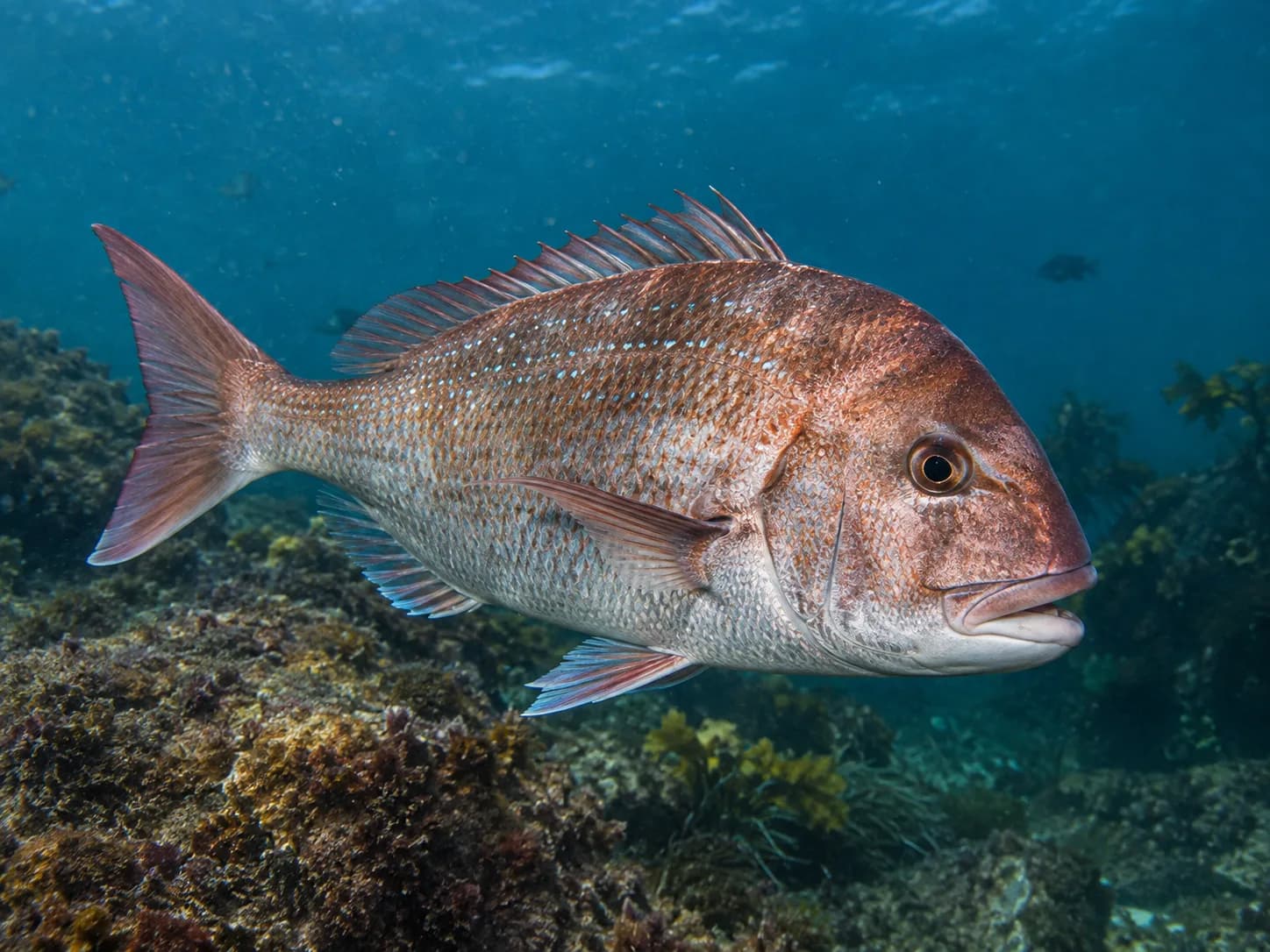
For much of the winter, snapper are spread out in deeper water. As the sea warms through spring, that changes. Fish move into the shallows, the harbours and the reef edges to feed up before spawning. They are hungry, they are close, and many of the better fish of the year are caught between October and December.
It is also the easiest time of year to catch one from a small boat, a kayak, the rocks or a wharf. You do not need a big boat or deep-water gear. You need to be in the right place with a simple rig.
Why the fish move in
Snapper follow the warm water and the food. As the water temperature climbs, baitfish, crabs, shellfish and worms become more active in shallow water, and the snapper follow them in. They are building condition before they spawn, so they feed hard.
That does not mean every bay is full of fish every day. Spring snapper move around, and the fish that were in one spot yesterday may be somewhere else today. The anglers who do well are the ones who keep looking.
Where to look
Reef edges and weed lines. The edge where rock or kelp meets sand is one of the most reliable places to fish. Snapper patrol these margins looking for food.
Shallow water, sometimes very shallow. In spring it is common to find snapper in 5 to 15 metres of water, and sometimes much less. Do not assume you need to go deep.
Harbour channels and points. Fish move in and out of harbours with the tide. Channel edges and points where the current runs past are worth trying, especially on the incoming tide.
Work-ups. Diving gannets and busting baitfish mean something is feeding underneath, and in many areas that includes snapper. Stay off the edge of the work-up and fish below it rather than driving through the middle.
Wharves and rocks. Spring is the best chance of the year to land a good snapper from the shore. Fish early and late, and use berley to bring fish to you.
When to fish
- Dawn and dusk. Low light brings snapper in closer and makes them less cautious.
- Around the tide change. Many spots fish best in the hour or two either side of high or low tide. Keep notes, because each spot has its own pattern.
- After a settled spell. A few calm days with clearing water often fish well. Dirty water after heavy rain can slow things down in harbours.
How to rig: four setups
You do not need all four. Pick the one that suits where you fish.
1. Soft baits
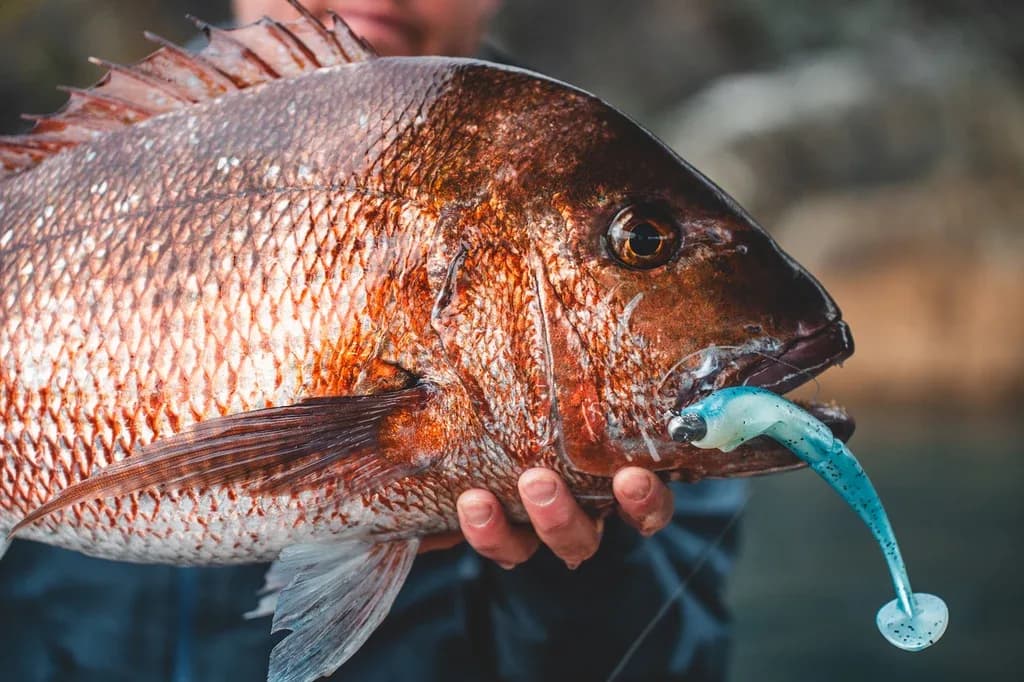
The most popular way to target spring snapper in shallow water, and a great match for a spinning reel.
- Reel and line: a 2500 to 4000 size spinning reel with 10 to 15 lb braid.
- Leader: 1 to 2 metres of 15 to 20 lb fluorocarbon.
- Jig head: as light as you can get away with. In shallow water, a light jig head that sinks slowly looks natural and catches more fish. Go heavier only when the current or depth means you cannot reach the bottom.
- Soft bait: a 5 inch or so jerkshad or grub is a good starting point. Carry a few colours, natural and bright.
Cast ahead of the drift, let the lure sink, then lift and let it fall back. Most bites come as the lure drops. Stay in contact with the line and watch it for twitches.
2. Straylining
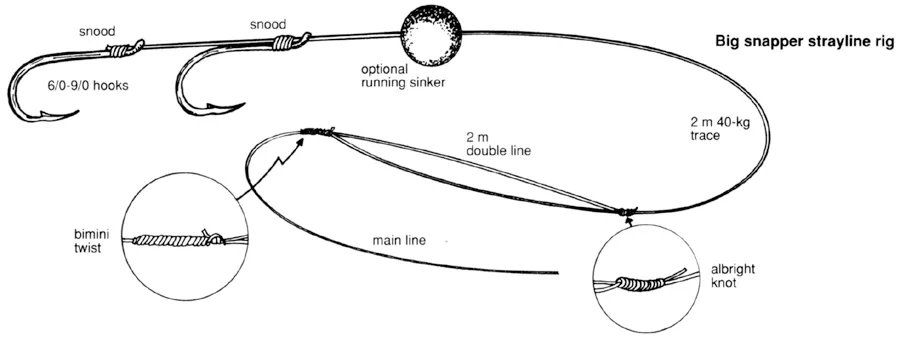
Straylining is a classic New Zealand method for shallow water. The idea is to let a bait drift down naturally through a berley trail with little or no weight.
- Rig: a single recurve (circle) hook tied straight to the leader. Add a small ball sinker above the hook only if you need it to get down.
- Bait: a half pilchard, a strip of fresh fish or a piece of squid.
- Berley: essential. Put a berley pot over the side or on the bottom and let the trail do the work.
Feed out line slowly so the bait sinks naturally. When a fish picks it up, let the line come tight before you lift. With circle hooks, do not strike hard; just wind and lift steadily.
3. Running rig
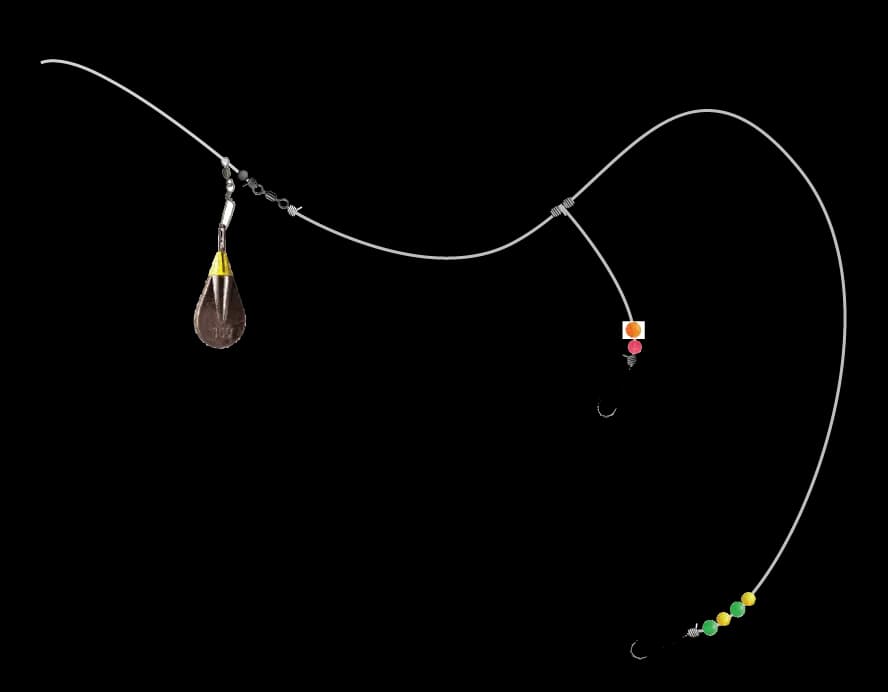
A simple, reliable rig for wharves, rocks and beaches.
- Rig: a ball sinker running on the main line above a swivel, then a leader of around half a metre to one metre down to a single circle hook.
- Why it works: a fish can pick up the bait and move off without feeling the weight of the sinker.
Use the lightest sinker that holds the bottom in the current.
4. Ledger (flasher) rig
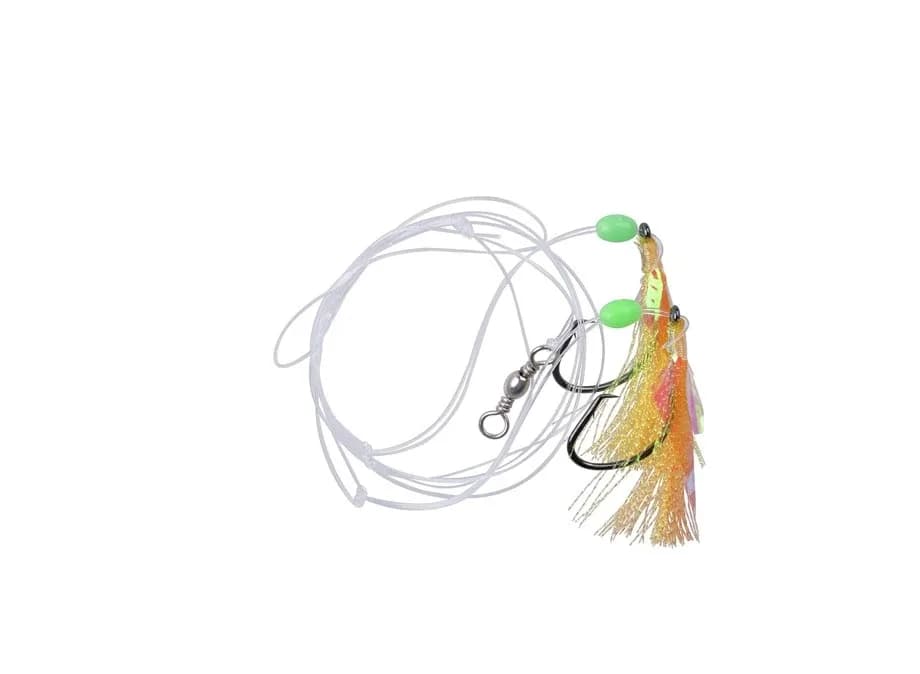
The easiest rig for beginners fishing from a boat, especially in slightly deeper water or current.
- Rig: a sinker at the bottom and two short droppers with hooks above it. Many are sold ready-tied, often with flasher material on the hooks.
- Bait: small pieces of pilchard, squid or fresh fish.
Drop it to the bottom, wind up slightly so the sinker just touches, and wait. When you feel a bite, let the fish take it before lifting.
Bait and berley
Fresh bait beats frozen bait almost every time. If you can catch a kahawai or a few jack mackerel before you start, cut them into strips. Otherwise, pilchards and squid are reliable.
Berley brings fish to you and keeps them there. A frozen berley log in a mesh bag or pot, hung over the side or lowered to the bottom, is simple and effective. Keep it going steadily; a trail that stops is a trail the fish leave.
Look after the fish
Spring snapper are getting ready to spawn. A few simple habits help keep the fishery healthy:
- Know the rules before you go. Minimum sizes and daily limits depend on where you fish and can change. Check the current rules from Fisheries New Zealand, or use the NZ Fishing Rules app, before every trip.
- Use circle hooks with bait. They usually hook fish in the corner of the mouth, which makes releasing undersized fish much easier.
- Release fish quickly and gently. Wet your hands, support the fish, keep it out of the water as briefly as you can, and let it swim away.
- Take what you need. You do not have to reach the limit for it to be a good day.
Gear checklist
- A spinning reel from 2500 to 4000, filled with 10 to 15 lb braid
- A rod rated for that line
- Fluorocarbon leader in 15 and 20 lb
- Light jig heads and a few soft baits
- Circle hooks and a few small ball sinkers
- Swivels
- Bait, and berley with a pot or mesh bag
- A towel, pliers and a measuring board
If you still need a reel for the season, How to pick your first spinning reel covers sizes, drag and gear ratio. And after the trip, give it a rinse: How to rinse and care for a reel after saltwater fishing.
Common questions
What month do snapper come into the shallows in New Zealand?
In most northern areas, from around October, as the water warms. The timing varies with the region and the season, so watch local reports and water temperatures.
What is the best rig for snapper from a wharf?
A running rig with a circle hook and fresh bait is simple and reliable. With berley and a quiet spot, straylining also works well from a wharf.
What size jig head should I use for snapper?
The lightest one that still reaches the bottom. In shallow, calm water that can be very light. Go heavier only for depth or current.
Should I use braid or mono for snapper?
Braid is better for soft baits because you feel every bite. For bait fishing, either works. Always use a fluorocarbon or mono leader.
What bait works best for snapper?
Fresh fish strips are hard to beat. Pilchards and squid are the reliable standbys.
The short version
- From October, look for snapper in shallow water: reef edges, weed lines, harbour channels and work-ups.
- Fish at dawn and dusk and around the tide change.
- Choose one simple rig: soft baits, straylining, a running rig or a ledger rig.
- Use fresh bait, keep the berley going and fish with circle hooks.
- Check the rules before you go and release fish carefully.
Tight lines this spring. Questions about rigging up? Email us at hello@coastcast.nz.